
en

 back
back
Exhibition Curator: Jacek Kornacki
Event details: LINK
—
Fundacja Tumult
Rynek Nowomiejski 28, Toruń
Opening: 14 May / 5:00 PM
Exhibition: 14 May – 31 July
—
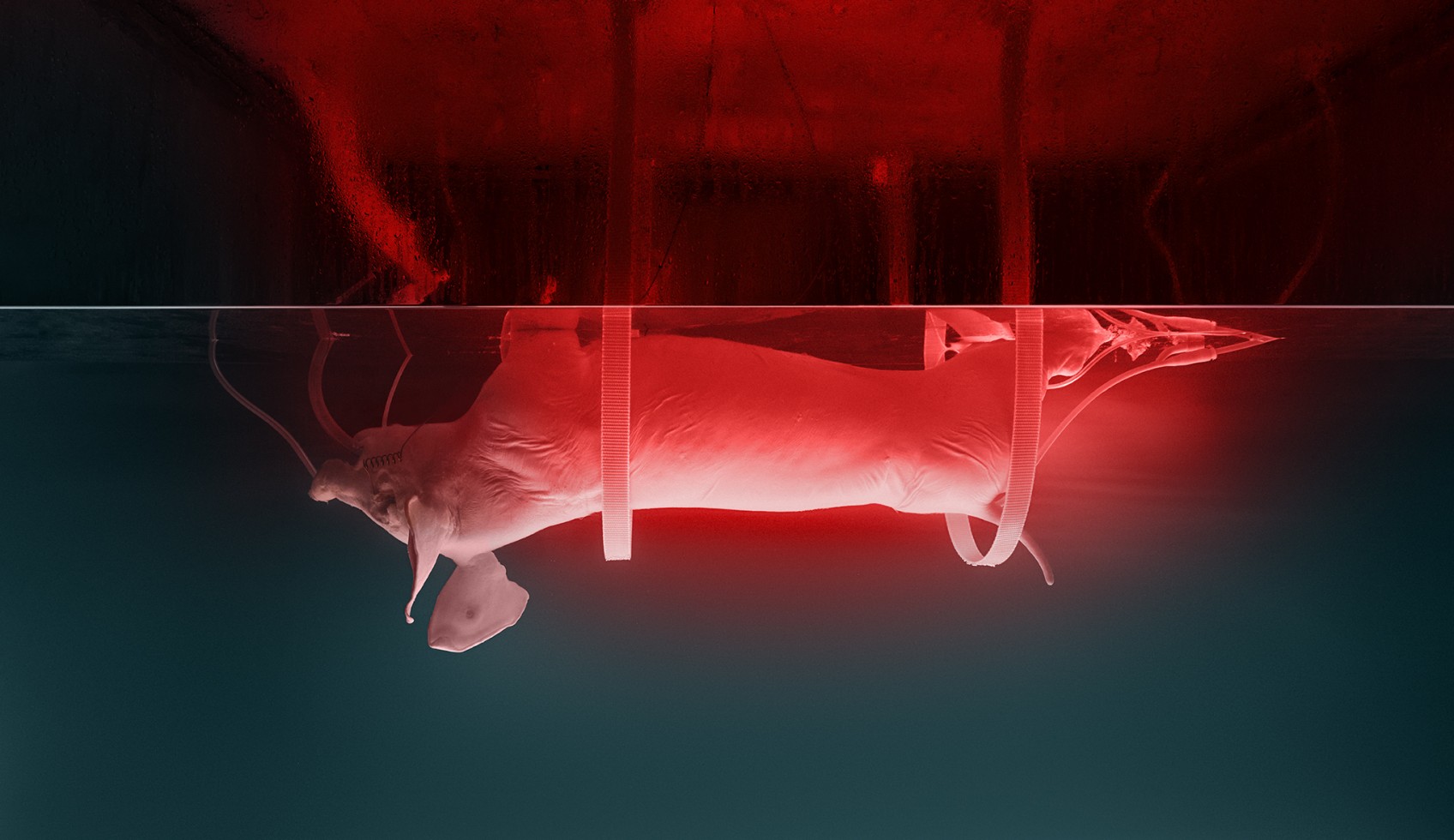
Popular science conference “BE A CONSCIOUS ORGAN DONOR” on transplantation, organized on the occasion of the opening of the exhibition “KNOCKOUT PIG”
Old Town Hall in Toruń – Burghers’ Hall
14 May / 2:00 PM
—
The exhibition was created as a critical voice regarding the changing paradigm of organ transplantation. For more than 50 years, organ transplantation and its development have been conditioned by the number of donors available worldwide. In its early stages (the 1980s), the transplantation community — with the active participation of governments, ethicists, churches, and social organizations — struggled to overcome resistance toward obtaining organs from deceased donors, as well as objections from families and communities. Various solutions adapted to regional ethical models were introduced in order to promote conscious organ donation, meaning the expression of consent to donate organs after death.
Another issue within transplantation programs involved doubts related to the integrity of the human being after transplantation, for example the idea of possessing another person’s heart. In the 21st century, these difficulties appear to have been overcome, and transplantation has become a widely accepted medical procedure. At the same time, posthumanist and post-anthropocentric attitudes have become increasingly influential in art and philosophy. Humanity has begun to understand the planetary biotope and the necessity of coexistence with other living organisms in order to preserve the planet’s balance. Scientific research has demonstrated the integrity and identity of species other than humans, as well as their capacity for feeling, coexistence, creating communities, and developing social customs within groups.
Such perspectives led to the emergence of the concept of “non-human beings,” paving the way for the inclusion of animals within legal systems in various countries, the establishment of legal representation for such beings, and the granting of rights comparable to human rights. Yet in the 21st century, scientists turned to genetic engineering in order to obtain organs from mammals for transplantation into humans and the preservation of human life. The removal of genes responsible for organ rejection enabled the breeding of pigs with modified genotypes (known in medical terminology as “knockout pigs”) and led to the first experimental xenotransplantations in humans.
At the beginning of the 21st century (in 2000), the exhibition’s author, together with Jacek Kornacki, initiated the socio-artistic campaign “Be a Conscious Organ Donor.” The campaign involved tattooing a specially designed symbol (an infinity sign ending with a heart) to express a person’s willingness to become an organ donor. The tattoo symbol carries this decision as a form of body language beyond the boundary of death, metaphorically speaking on behalf of the deceased. This cultural connotation refers to the marking of the body present in various cultures for thousands of years, while also reversing the stigma associated with tattooing during the Holocaust. The BSDN campaign is regarded as the most significant socio-artistic initiative in postwar Polish history and the campaign with the broadest social impact (the symbol was tattooed on the arms of over 100,000 people).
Maciej Śmietański returns to the discourse on transplantation through the exhibition “Knockout Pig” because of the lack of ethical and moral reflection surrounding xenotransplantation practices. The media presents such procedures as an unconditional triumph of humanity over death, one-sidedly and without commentary. Similarly, the medical community frames ethical concerns in the opposite direction, considering only the question of whether the human body will accept a pig organ. Scientists do acknowledge that primate organs might be biologically more compatible with humans, but according to researchers, primates evoke problematic ethical associations — they are simply too similar to us. Therefore, art appears to become a tool for re-entering this discourse and serving as a kind of alarm bell in the era of posthumanism.